“They represent the ultimate trade-off: sacrificing a small margin of clinical precision for a massive gain in patient compliance and daily comfort.”
The Shift to Non-Invasive Sensing
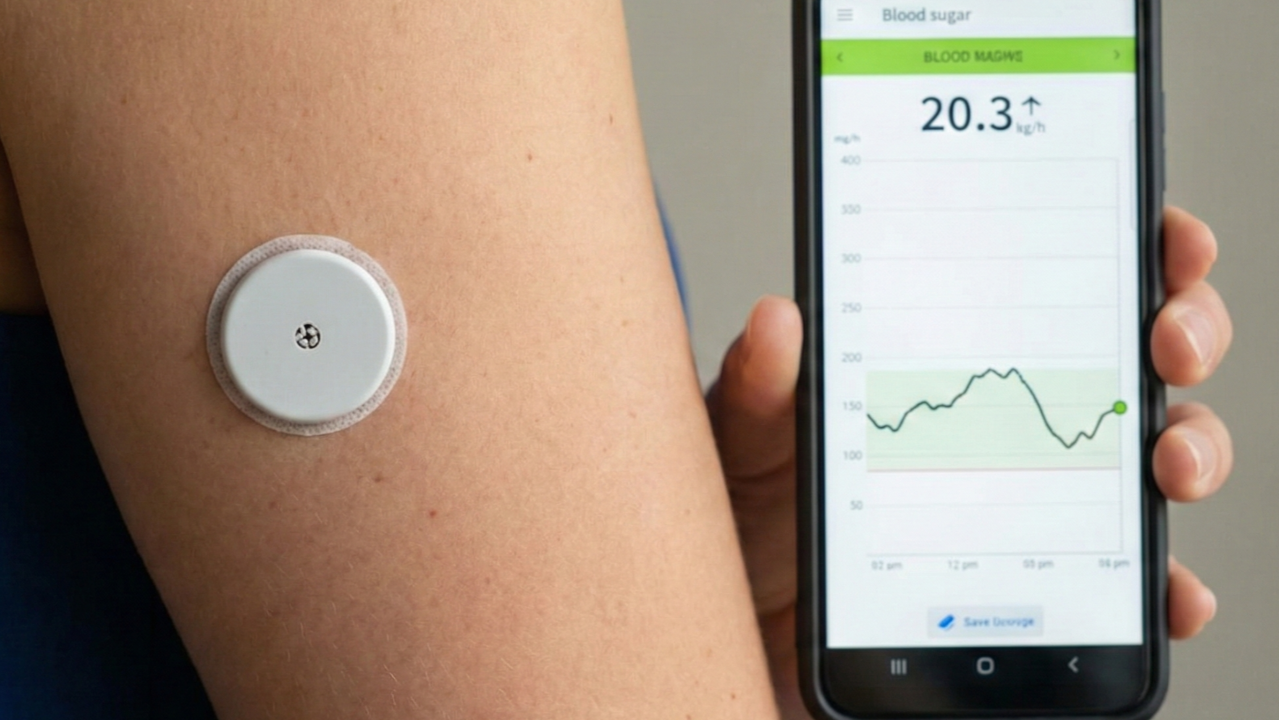
The 2025 medical technology market is being redefined by a shift from minimally invasive to fully non-invasive monitoring. At the center of this disruption is Magnetohydrodynamics, a biophysical process that uses electromagnetic fields to extract interstitial fluid through the skin without piercing it. This technology, currently embodied in devices like the recent one in the Nordics, aims to capture a significant portion of a global monitoring market projected to reach $34 billion this year. While the appeal of a needle-free existence is the primary market draw, the real-world success of these devices depends on how they navigate a series of inherent technical and physiological vulnerabilities.
The Frictionless User Experience
The most significant commercial draw is the frictionless user experience. By eliminating the pain and biohazard waste of subcutaneous needles, non-invasive platforms are successfully targeting the 400 plus million individuals with Type 2 diabetes and the growing health optimizer segment. In 2025, these devices are increasingly positioned as over-the-counter lifestyle tools. They utilize a modular design where a reusable transmitter is paired with low-cost, disposable enzyme patches, significantly reducing the long-term economic and environmental burden compared to traditional all-in-one disposable sensors.
The Confidence Gap
However, the transition to the skin surface introduces a confidence gap characterized by several critical drawbacks:
The Precision Trade-Off: While industry-leading needle-based sensors achieve an accuracy of 8 to 10 percent MARD, needle-free platforms currently hover around 11.5 to 12.9 percent. This small difference is the barrier between a device functioning as a lifestyle tracker and a medical diagnostic trusted for high-stakes insulin dosing.
Environmental Sensitivity: Unlike a subcutaneous filament shielded by tissue, a topical sensor is exposed to the chaos of the external environment. Sweat, dehydration, and fluctuations in skin temperature can disrupt the fluidic bridge required for extraction. In cold conditions, vasoconstriction can reduce the availability of target analytes at the skin surface, leading to false lows or data gaps.
The Temporal Lag: All interstitial fluid based sensors face a physiological delay of 5 to 15 minutes as analytes diffuse from the blood into surrounding fluid. In non-invasive systems, this is compounded by the time required to physically move that fluid through the skin. During rapid metabolic drops, the device may report a safe level when the user is already experiencing clinical distress.
Biofouling and Drift: The enzymatic surface of a non-invasive patch is prone to biofouling, meaning the accumulation of proteins and lipids from the skin, which can degrade the signal over a 24-hour period. This requires advanced anti-fouling coatings to prevent the sensor from drifting and losing accuracy.
Regulatory Realities and Clinical Limits
As these devices seek regulatory clearance like the CE Mark or FDA status, they remain trend-tracking tools rather than absolute diagnostic replacements. For the market at large, they represent the ultimate trade-off: sacrificing a small margin of clinical precision for a massive gain in patient compliance and daily comfort.
Highlights
#CGM #MARD #MedTech #DiabetesInnovation #MetabolicHealth #NonInvasive #Biohacking #WearableTech #Biosensors #HealthData #DigitalHealth #ClinicalAccuracy #FutureOfMedicine #GlycemicVariability #TransdermalSensing