“If blood flow is indeed a master biomarker for longevity, this device could offer a 10-year head start on preventing cognitive decline.”
The Rise of Extreme Longevity
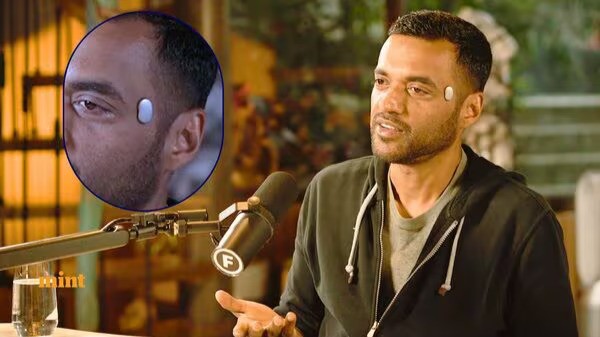
If you noticed a small, metallic gold or silver clip on Deepinder Goyal’s face during his recent podcast appearance, you aren’t alone. The mystery device has sparked intense curiosity, with many wondering if it is a futuristic hearing aid or a piece of high-tech jewelry. The reality is far more experimental: it is a wearable sensor called Temple, designed to measure Cerebral Blood Flow in real time. Deepinder has officially entered the extreme longevity arena, joining the likes of Bryan Johnson in treating the human body as a system that can be hacked, monitored, and optimized.
The Gravity Ageing Hypothesis
Deepinder’s move into deep tech is driven by a personal theory he calls the Gravity Ageing Hypothesis.
The Theory: Because humans are upright most of the time, gravity constantly works against the heart to pull blood away from the brain. Over decades, this low flow may starve critical regions like the hypothalamus, which serves as the body command center, accelerating the ageing process.
The Experiment: Deepinder has been wearing the Temple device for over a year to track his own brain flow. He claims that using inversion tables by hanging upside down for ten minutes a day over six weeks increased his average brain flow by seven percent, a shift he believes could nullify ten years of natural age-related decline.
Parallels in Existing Tech
While the on-face design is unique, the technology shares a foundation with existing medical and biohacking tools:
NIRS Patches: Hospitals use Near-Infrared Spectroscopy to monitor brain oxygen in critical care. Temple aims to make this bulky tech wearable and world class for consumers.
Muse S: While popular for tracking brain waves through electroencephalography, Muse focuses on mental states rather than the actual physical blood flow that Temple monitors.
The Don’t Die Movement: Like Bryan Johnson Blueprint, Temple is built for those who view death as an engineering problem. It turns a medical biomarker like brain flow into a daily scoreboard.
The Data-Action Gap
A major hurdle for devices like Temple is the data-action gap. In 2026, many users are already experiencing health tech burnout from tracking steps, sleep, and heart rate without knowing what to do with the numbers. If a device tells you your brain flow is low, the only current action suggested by this theory is inversion therapy, something most people cannot do while at work or commuting. Without a clear, practical roadmap for the average person, there is a risk that Temple becomes a vanity metric where data causes more anxiety than it solves.
Optimist Versus Skeptic Perspectives
An optimist view says Temple focuses on the brain, the most neglected organ in consumer wearables. If blood flow is indeed a master biomarker for longevity, this device could offer a ten-year head start on preventing cognitive decline. It represents a bold, $25 million commitment to Indian deep tech and preventive health. Conversely, a skeptic view notes that the gravity hypothesis has faced sharp criticism from the medical community, with experts calling it reductionist and unproven. Standing upright is a natural human state, and many doctors argue that basic habits like exercise and sleep are far more effective than hanging upside down. Additionally, wearing a visible sensor on your face carries a high social tax that may prevent mass adoption.
The Outlook for Mass Adoption
Based on the current state of technology, Temple will likely find its home as a niche tool for elite biohackers. It is the perfect gadget for the performance-obsessed crowd who wants every possible data point. However, for it to fare well with the general public, it must prove two things: that the science is peer-reviewed and that the data leads to simple, actionable habits beyond hanging upside down.
Highlights
#Longevity #BioHacking #DeepTech #BrainHealth #HealthTech #FutureOfHealth #BrainFlow